Centennial Nobel
Quantum AI Algorithms
The Quantum Artificial Intelligence Algorithms (QAIA) integrate the parallel search capabilities of quantum computing with the self-learning mechanisms of artificial intelligence (AI), aiming to drive intelligent optimization of complex systems through quantum principles. Key algorithmic frameworks include:
-
AI-Assisted Quantum Computing: Utilizing AI algorithms to optimize quantum hardware and quantum system performance.
-
Quantum-Inspired Algorithms: Drawing upon quantum principles to execute intelligent optimization on classical hardware.
-
Quantum AI (QAI): Executing AI models directly on quantum hardware, encompassing both hybrid quantum-classical and fully quantum architectures.

Quantum AI Algorithms
The Quantum Artificial Intelligence Algorithms (QAIA) integrate the parallel search capabilities of quantum computing with the self-learning mechanisms of artificial intelligence (AI), aiming to drive intelligent optimization of complex systems through quantum principles. Key algorithmic frameworks include:
-
AI-Assisted Quantum Computing: Utilizing AI algorithms to optimize quantum hardware and quantum system performance.
-
Quantum-Inspired Algorithms: Drawing upon quantum principles to execute intelligent optimization on classical hardware.
-
Quantum AI (QAI): Executing AI models directly on quantum hardware, encompassing both hybrid quantum-classical and fully quantum architectures.
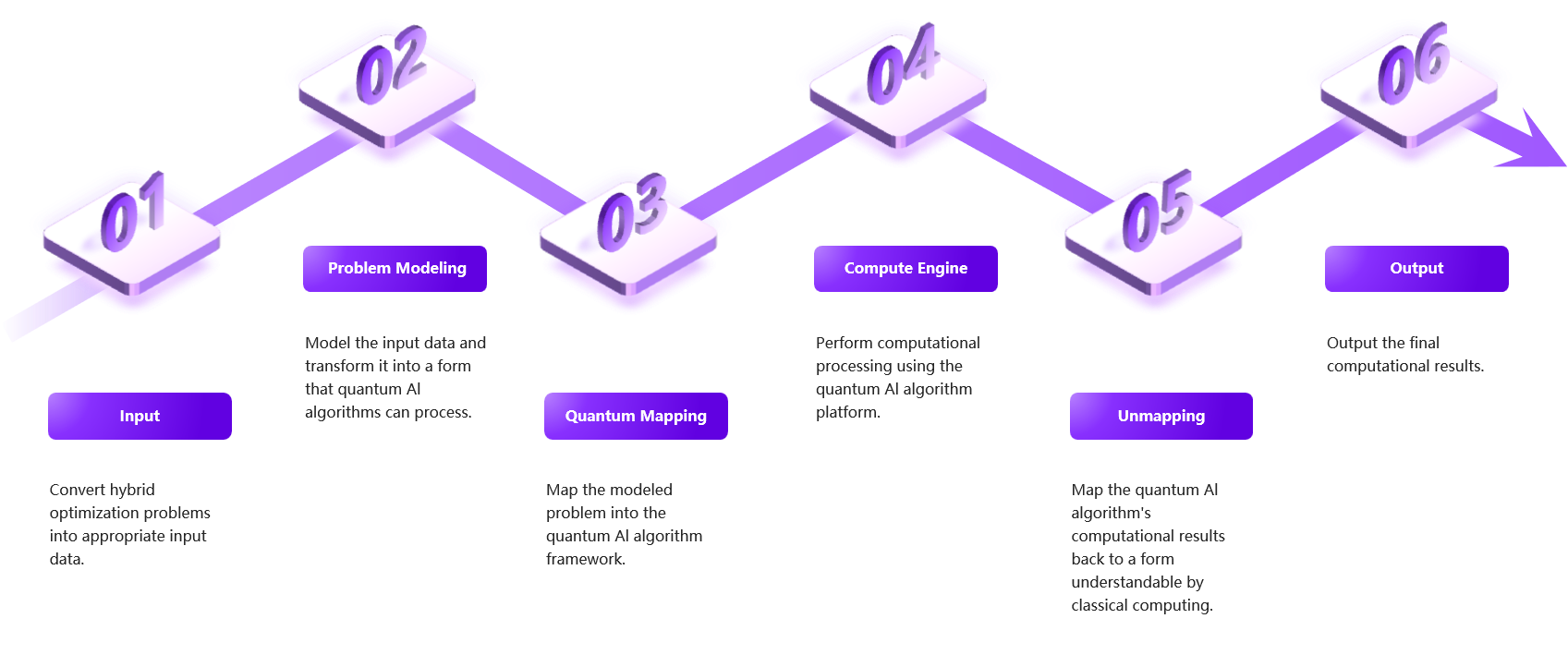
Algorithm Architecture
Key Advantages

Solving Intractable Complex Optimization Problems
Tailored for combinatorial optimization challenges in traffic scheduling, energy distribution, portfolio management, and supply chain logistics. Maintains high computational efficiency even in scenarios with exponentially scaling variables.

Superior Solutions Under Limited Compute Power
Leverages quantum-inspired search mechanisms to enhance exploration depth and global optimization capabilities, delivering superior feasible solutions or faster convergence speed under identical hardware constraints.

Seamless Deployment on Legacy Infrastructure
Runs on classical servers or cloud platforms without requiring dedicated quantum hardware, enabling direct integration into enterprise algorithmic platforms (e.g., scheduling, planning, and decision-support systems).
Algorithm advantages
Solving Intractable Complex Optimization Problems
Tailored for combinatorial optimization challenges in traffic scheduling, energy distribution, portfolio management, and supply chain logistics. Maintains high computational efficiency even in scenarios with exponentially scaling variables.
Superior Solutions Under Limited Compute Power
Leverages quantum-inspired search mechanisms to enhance exploration depth and global optimization capabilities, delivering superior feasible solutions or faster convergence speed under identical hardware constraints.
Seamless Deployment on Legacy Infrastructure
Runs on classical servers or cloud platforms without requiring dedicated quantum hardware, enabling direct integration into enterprise algorithmic platforms (e.g., scheduling, planning, and decision-support systems).
Application Cases
Graph Theory Problems
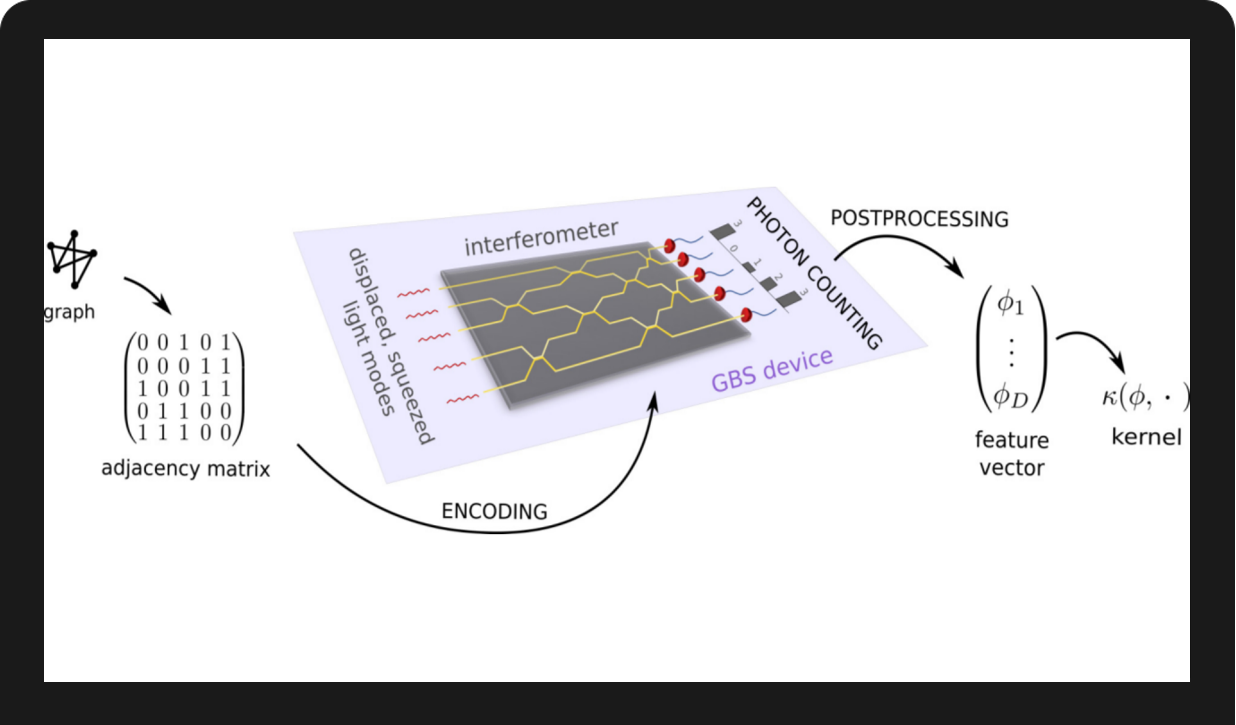
By revealing the mathematical connection between Gaussian Boson Sampling (GBS) and graph theory, the system has successfully solved high-value practical problems including dense subgraph identification and Max-Haf problems, vastly outperforming classical computing speeds.
Quantum Chemistry
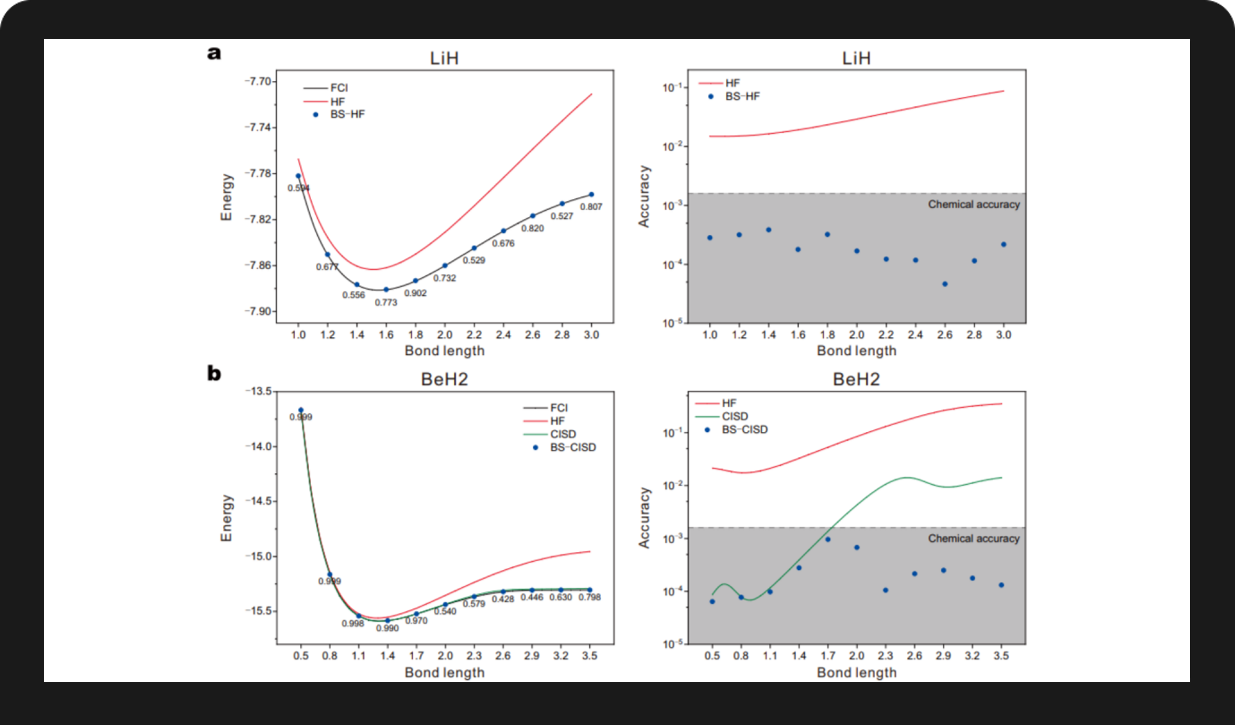
Hybrid quantum-classical algorithms achieved chemical accuracy (1.6 × 10 ⁻ ³ Hartree) on potential energy curves for molecules such as LiH and BeH ₂, demonstrating clear potential to surpass classical simulation approaches.
Machine Learning
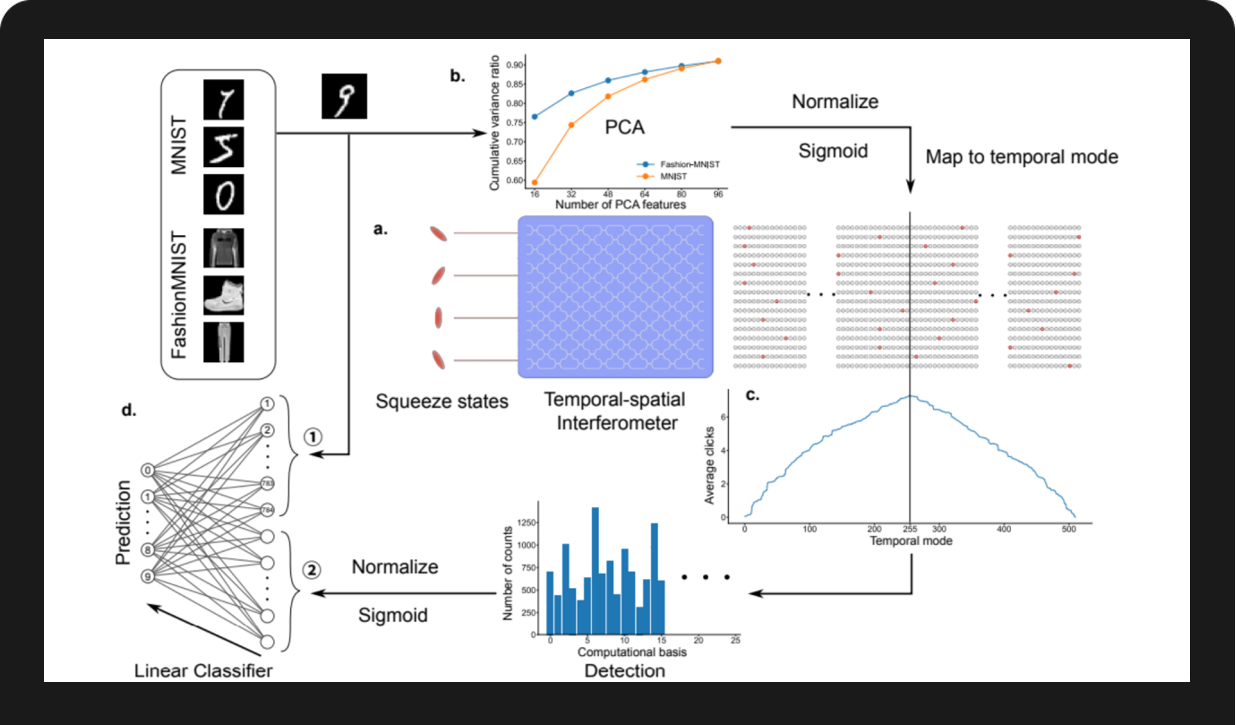
Utilizing an 8176-mode Gaussian Boson Sampling (GBS) architecture, test accuracies of 95.86% and 85.95% were achieved on the MNIST and Fashion-MNIST datasets respectively, outperforming classical Support Vector Classification (SVC) with linear kernels.
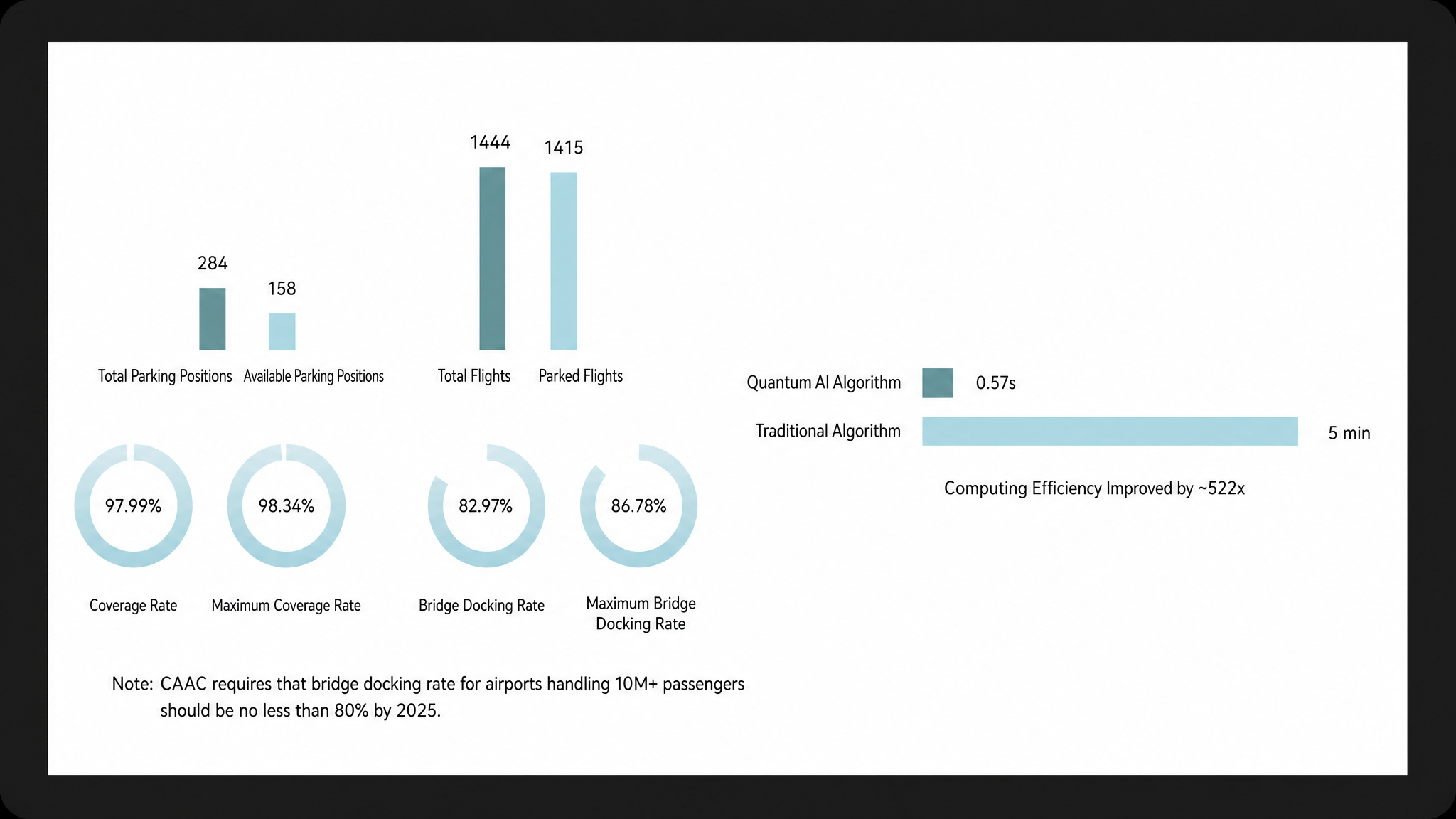
Transportation & Flight Scheduling
Deployed at top-10 domestic hub airports in China facing high daily flight density and tight gate resources. By implementing hybrid quantum-classical algorithms, flight conflicts were drastically reduced and jet bridge utilization rates increased, cutting computation times down to seconds.
Application Cases
Graph Theory Problems
By revealing the mathematical connection between Gaussian Boson Sampling (GBS) and graph theory, the system has successfully solved high-value practical problems including dense subgraph identification and Max-Haf problems, vastly outperforming classical computing speeds.
Quantum Chemistry
Hybrid quantum-classical algorithms achieved chemical accuracy (1.6 × 10 ⁻ ³ Hartree) on potential energy curves for molecules such as LiH and BeH ₂, demonstrating clear potential to surpass classical simulation approaches.
Machine Learning
Utilizing an 8176-mode Gaussian Boson Sampling (GBS) architecture, test accuracies of 95.86% and 85.95% were achieved on the MNIST and Fashion-MNIST datasets respectively, outperforming classical Support Vector Classification (SVC) with linear kernels.
Transportation & Flight Scheduling
Deployed at top-10 domestic hub airports in China facing high daily flight density and tight gate resources. By implementing hybrid quantum-classical algorithms, flight conflicts were drastically reduced and jet bridge utilization rates increased, cutting computation times down to seconds.
Application Scenarios
-
Transportation
Powering intelligent scheduling and route planning to accelerate responses in complex multi-stage logistics operations.
-
Satellite Networks
Assisting in constellation topology design and cross-link scheduling to enable seamless space-ground integration.
-
Finance
Enhancing the accuracy of portfolio allocation and financial risk control.
-
Energy & Power Grids
Improving real-time coordination and stability across power generation, transmission, and distribution.
-
Telecom
Optimizing spectrum allocation and network resource management to support high-density traffic loads.
-
Supply Chain
Achieving multi-objective balancing and global optimization across inventory, transportation, and production phases.
-
Pharmaceuticals
Accelerating molecular modeling, clinical trial design, and cold-chain logistics optimization.
-
Artificial Intelligence
Boosting model training efficiency and high-dimensional data processing capacity.


-
Transportation
Powering intelligent scheduling and route planning to accelerate responses in complex multi-stage logistics operations.
-
Satellite Networks
Assisting in constellation topology design and cross-link scheduling to enable seamless space-ground integration.
-
Finance
Enhancing the accuracy of portfolio allocation and financial risk control.
-
Energy & Power Grids
Improving real-time coordination and stability across power generation, transmission, and distribution.
-
Telecom
Optimizing spectrum allocation and network resource management to support high-density traffic loads.
-
Supply Chain
Achieving multi-objective balancing and global optimization across inventory, transportation, and production phases.
-
Pharmaceuticals
Accelerating molecular modeling, clinical trial design, and cold-chain logistics optimization.
-
Artificial Intelligence
Boosting model training efficiency and high-dimensional data processing capacity.

Telephone: +86 4008165520
E-mail:service@jiuzhangqt.com
Address: 11th Floor, Building C, Big Data Industry Base, High-Tech Zone, Jinan, Shandong Province
Copyright © Jiuzhang (Jinan) Quantum Technology Co., Ltd. All Rights Reserved. 鲁ICP备2023015890号
Scan the QR Code
Follow Our Official WeChat Account