Centennial Nobel
Not Enough Space? Trade Time for It: Revisiting Jiuzhang 4.0 After the Explosion of Tau (τ) Law
Nearly 80 years after the birth of the transistor, China has finally established a new paradigm for chip development—the Tau (τ) Law.
Recently, the Tau (τ) Law proposed by Huawei sparked widespread discussion. Unlike Moore's Law, which relies on continually scaling down transistor dimensions (geometric scaling), the Tau (τ) Law emphasizes systematically reducing signal propagation latency (τ) to boost performance through "time scaling".
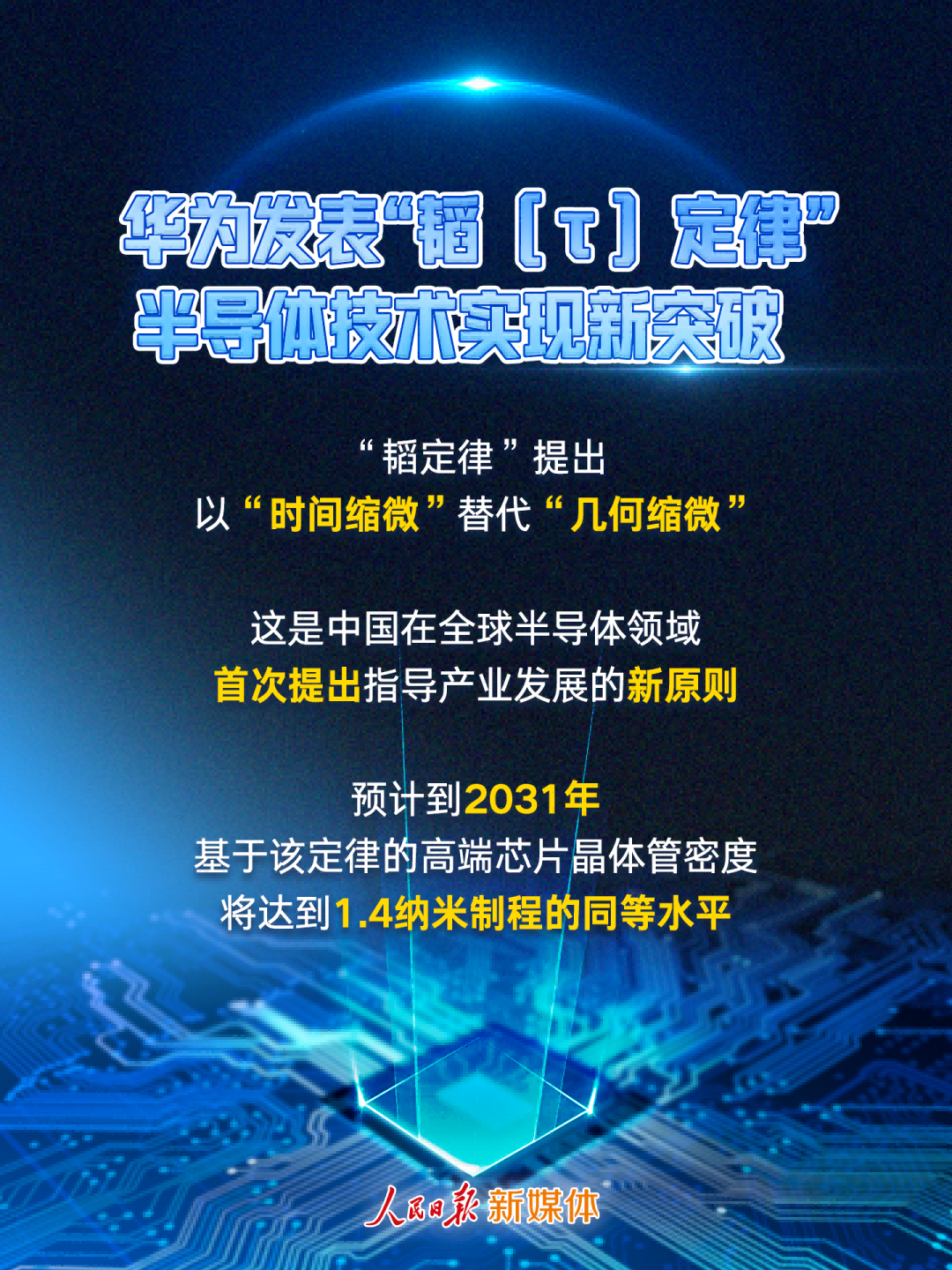
Figure 1: Tau (τ) Law. (Source: People's Daily)
In plain English, it comes down to: "Not enough space? Trade time for it."
While Moore's Law relies on making transistors smaller to cram more components into a limited footprint, the Tau (τ) Law focuses on enabling signals to travel faster with less waiting—shifting the focus of efficiency gains from the spatial dimension to the temporal dimension.
Interestingly, in quantum computing—particularly optical quantum computing—this concept of trading time for space emerged long ago.
Space vs. Time: Two Paths in Optical Quantum Computing
Quantum computing is considered a key direction for the post-Moore era. Rather than scaling transistors, it leverages principles like quantum superposition and interference to achieve exponential speedups over classical computers for specific problems.
In optical quantum computing, scaling up system capacity has always been a central challenge.
Currently, there are two primary technical approaches to implementing 100-photon-level Gaussian Boson Sampling (GBS): spatial interference schemes and temporal interference schemes.
-
Spatial Encoding: Offers high system efficiency and strong circuit connectivity, but expanding mode capacity typically requires adding large numbers of optical components, causing system complexity to skyrocket.
-
Temporal Encoding: Provides an alternative route by multiplexing modes across the time domain. This allows a single experimental setup to carry more modes over time, conferring higher scalability. However, it introduces new challenges regarding circuit connectivity and overall system efficiency.
Borrowing the language of the Tau (τ) Law, this represents a conceptual shift from "spatial expansion" to "temporal utilization."

Figure 2: The "Jiuzhang 4.0" photonic quantum computing prototype. (Source: University of Science and Technology of China)
Jiuzhang 4.0: Demanding Both Space and Time
Unveiled in 2026, Jiuzhang 4.0 introduced the first large-scale Gaussian Boson Sampling architecture featuring hybrid spatio-temporal encoding.
Its interference stage consists of a three-stage N-mode fully connected spatial interferometer integrated with a two-stage delay loop:
-
The first-stage small loop delay increments by the Optical Parametric Oscillator (OPO) repetition interval τ.
-
The second-stage large loop delay increments by Nτ.
The breakthrough of this design lies not in multiplying hardware components, but in using spatio-temporal multiplexing to expand input pulses from a single time mode into numerous time modes, eventually filling all spatial modes.
Simply put, Jiuzhang 4.0 addresses a fundamental question: when spatial capacity is constrained, can the temporal dimension be harnessed to continue scaling the system?
By balancing these dimensions, the system retains the high connectivity of spatial interference while gaining the scalable capacity of temporal encoding.
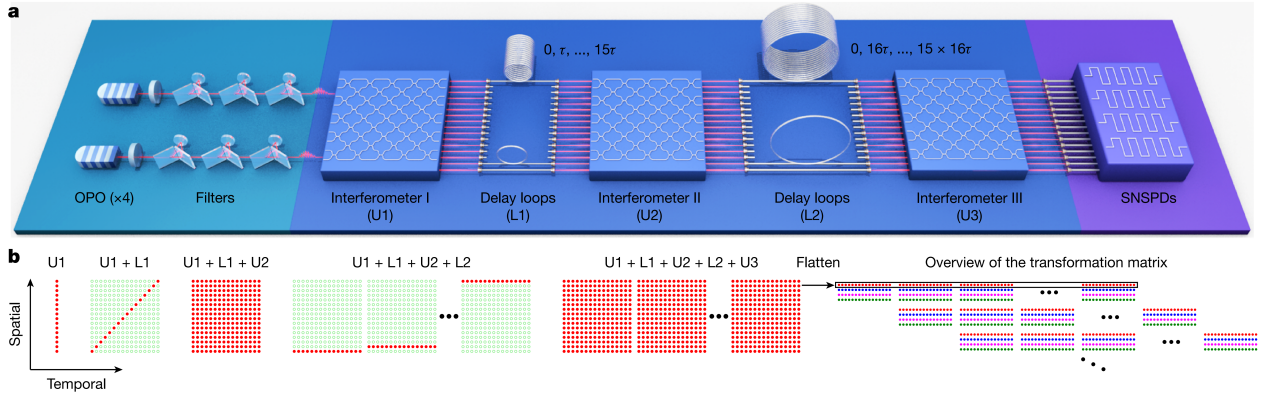
Figure 3: Schematic of spatio-temporal hybrid encoding in "Jiuzhang 4.0". (Source: Nature)
This trajectory was already visible in Jiuzhang 3.0 in 2023, which achieved quasi-photon-number-resolving detection by splitting multi-photon states across spatial modes and mapping spatial information onto the time domain via delay structures.
From Jiuzhang 1.0 to Jiuzhang 4.0, a clear trend has emerged: scaling no longer relies solely on expanding spatial resources, but on transforming time itself into a computational resource.
From Moore's Law to Tau (τ) Law to Quantum Computing
iuzhang 4.0 represents an optical quantum architecture, while the Tau (τ) Law targets semiconductor chip systems; the two are not directly interchangeable.
Yet viewed through the broader lens of technology evolution, both mirror a parallel trend:
When traditional physical dimensions approach their limits, innovation shifts from "spatial expansion" to "temporal optimization."
From Moore's Law ("shrinking size") to the Tau (τ) Law ("shrinking latency") to quantum computing breaking scale limits via spatio-temporal multiplexing, humanity continues to chart new paths for computational growth.
Perhaps the key to future computing power lies not in who controls more components, but in—
Who uses time more effectively.
Paper Link: https://www.nature.com/articles/s41586-026-10523-6
Share


Telephone: +86 4008165520
E-mail:service@jiuzhangqt.com
Address: 11th Floor, Building C, Big Data Industry Base, High-Tech Zone, Jinan, Shandong Province
Copyright © Jiuzhang (Jinan) Quantum Technology Co., Ltd. All Rights Reserved. 鲁ICP备2023015890号
Scan the QR Code
Follow Our Official WeChat Account