Centennial Nobel
Centennial Nobel | Quantum Entanglement: From Conceptual Clashes to a Technological Revolution
In 1935, Albert Einstein, Boris Podolsky, and Nathan Rosen (collectively known as EPR) published a groundbreaking paper in physics [1]. They asserted that if quantum mechanics were complete, two distantly separated particles would exhibit "spooky action at a distance"—where measuring one particle instantaneously dictates the state of another, even across light-years. Because this phenomenon appeared to violate Special Relativity's fundamental postulate that information cannot travel faster than light, EPR concluded that quantum mechanics was incomplete, positing the existence of undiscovered "local hidden variables" predetermined at particle creation.
For decades, mainstream physicists dismissed this clash as mere philosophical speculation. That changed in 1964 when Northern Irish theoretical physicist John Stewart Bell formulated Bell's Inequality [2]. Bell mathematically proved that if local realism (Einstein's worldview) holds true, experimental results must satisfy his inequality; conversely, if quantum mechanics is correct, the inequality will be violated.
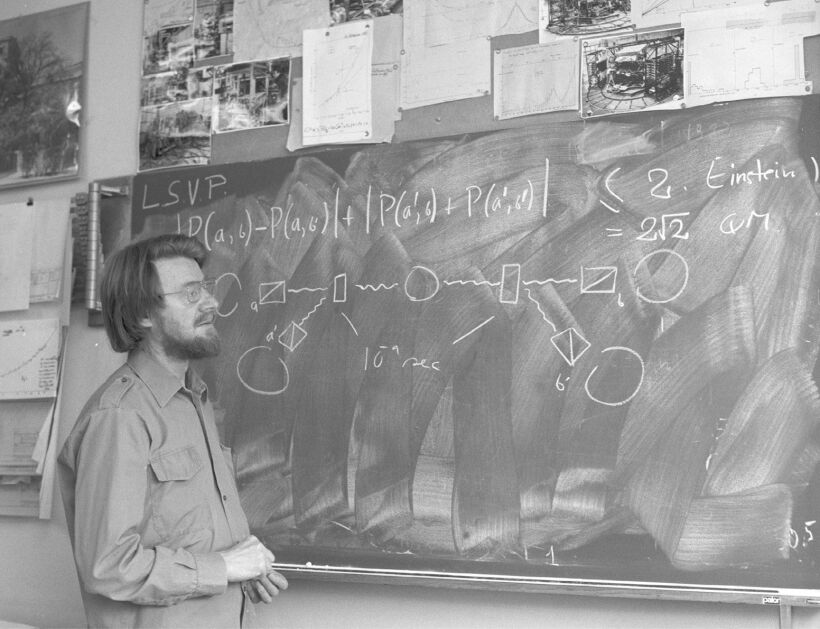
Figure 1: John Stewart Bell in his office at CERN
This theoretical breakthrough sparked a half-century experimental relay. In 2022, experimental physicists John F. Clauser, Alain Aspect, and Anton Zeilinger were jointly awarded the Nobel Prize in Physics for pioneering experiments demonstrating the violation of Bell inequalities and establishing the reality of quantum entanglement.
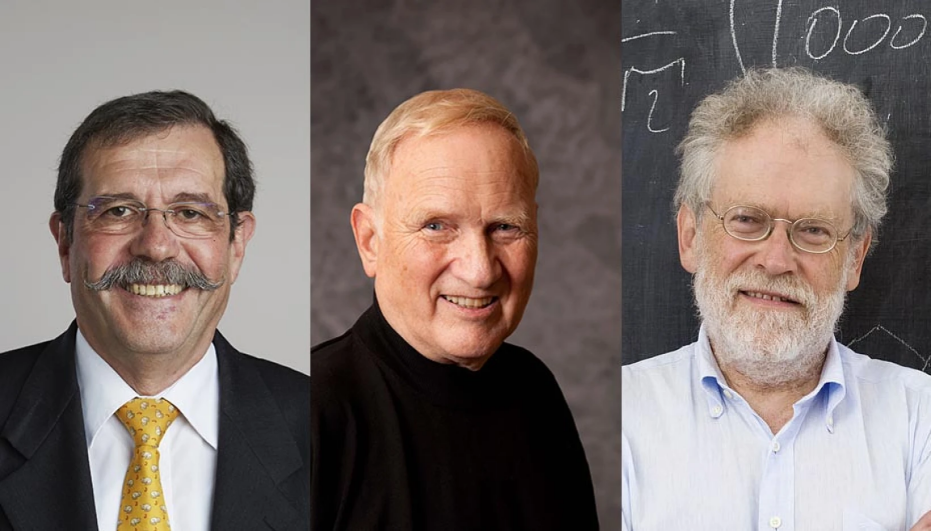
Figure 2: From left to right: Alain Aspect, John F. Clauser, and Anton Zeilinger
The Solitary Pioneer — John Clauser
In the late 1960s, Columbia University graduate student John Clauser stumbled upon a paper in Physics, an obscure journal. Authored by John Bell, its unassuming title belied a monumental insight: an empirically testable criterion to resolve the Einstein-Bohr debate.
Captivated, Clauser resolved to execute the experiment. Advisors cautioned against it: "That's philosophy, not physics. If you want a job, stay away." Questioning quantum foundations was considered professional suicide. Even Richard Feynman (1965 Nobel Laureate), later dubbed the father of quantum computing, bluntly rebuked him: "You're publicly denying quantum physics!"
Clauser persevered. In 1969, collaborating with Michael Horne, Abner Shimony, and Richard Holt, he adapted Bell's ideal model into an executable experimental protocol—the CHSH inequality [3]. Three years later, in a UC Berkeley basement, Clauser and doctoral student Stuart Freedman constructed an optical apparatus using scavenged components: exciting calcium atoms to generate entangled photon pairs directed toward polarizers ten feet away.
After 200 hours of data collection, the result was definitive: experimental data violated Bell's inequality by 6.3 standard deviations [4]. Quantum mechanics prevailed; Einstein was wrong.
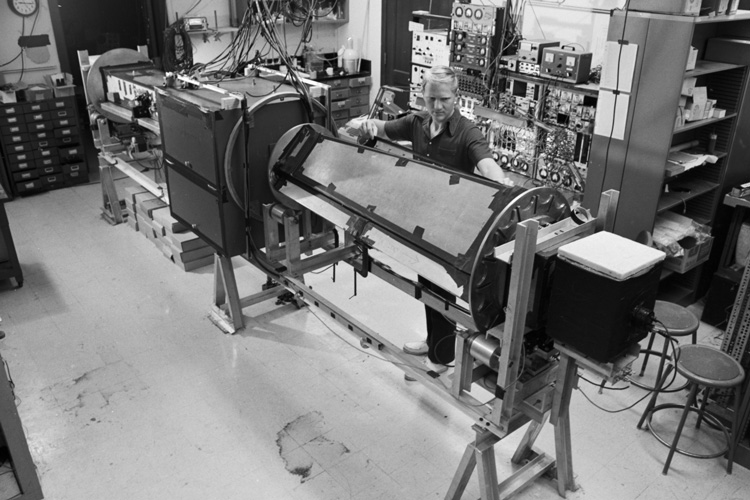
Figure 3: Clauser and Freedman's 1970s experimental setup for testing Bell's theorem
Widespread recognition did not follow immediately. Peers remained indifferent, telling Clauser: "Nice experiment, now go do some real physics." A competing Harvard experiment even yielded contradictory results (later shown to be flawed). Doubting his own findings, Clauser conducted three additional experiments; all confirmed that entanglement was real and non-locality inescapable.
Decades later, Clauser admitted: "I secretly hoped to overturn quantum mechanics. I was sad to see Einstein proven wrong." Yet he respected empirical truth. His stubborn persistence planted the seeds of quantum information science.
The Precision Artisan — Alain Aspect
If Clauser lit the torch, Alain Aspect engineered the lighthouse.
In the early 1980s, Aspect pursued his doctorate at Université Paris-Sud and chose to test Bell's inequality. While groundbreaking, Clauser's setup possessed a critical vulnerability: fixed polarizer orientation. This allowed for the possibility that the source or detectors could "anticipate" settings through a local mechanism—the "locality loophole."
Aspect set out to seal it. He designed an ingenious mechanism: switching photon optical paths every 10 nanoseconds using acousto-optic switches during the photon's 20-nanosecond flight time. Because measurement settings were finalized after photon emission, no local signal could coordinate the outcome in advance.
To execute this, Aspect substituted fragile crystals with distilled water as the acousto-optic medium; his "water-based switch" resides today in the Nobel Prize Museum in Stockholm.
In 1982, Aspect and his colleagues executed three landmark experiments [5]. Results confirmed the violation of Bell's inequality while dramatically narrowing the locality loophole. Although switching was periodic rather than fully random, his work established a benchmark in Bell testing.
Aspect reflected: "I wasn't trying to prove Einstein wrong; I was trying to prove he had pointed out an extraordinary phenomenon." He elevated quantum non-locality from philosophical debate to indisputable experimental fact.
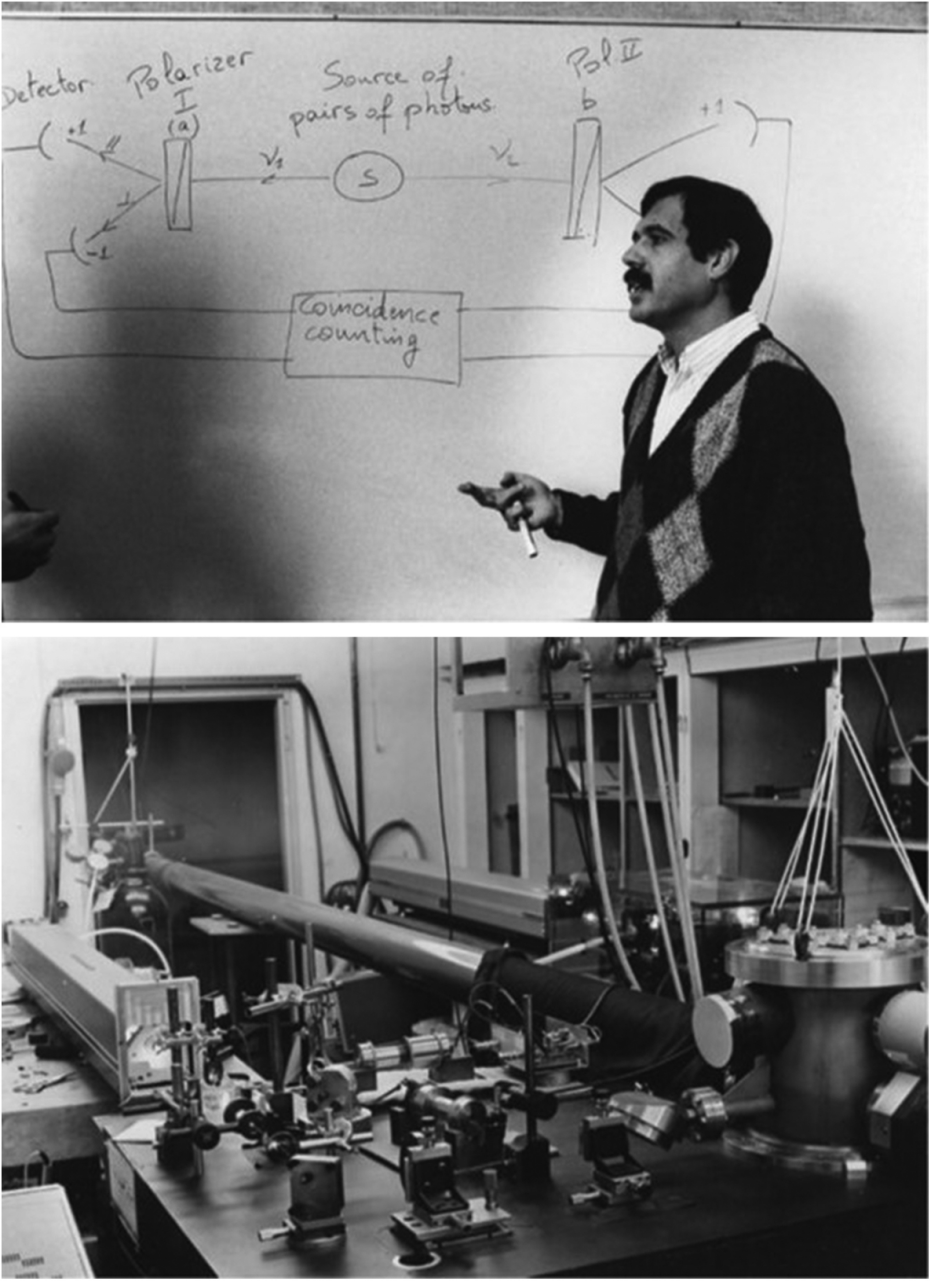
Figure 4: Alain Aspect alongside his experimental apparatus
The Visionary Architect — Anton Zeilinger
While his predecessors validated entanglement, Anton Zeilinger transformed it into an operational tool.
By the 1990s, Zeilinger realized entanglement was an actionable technological resource. In 1997, at the University of Innsbruck, he achieved experimental quantum teleportation—transferring a photon's quantum state to a distant photon via entanglement without transferring the physical particle [6]. This protocol remains foundational to quantum communication networks.
Collaborating with Daniel Greenberger and Michael Horne, he formulated the GHZ state, expanding entanglement from two-particle systems to multi-particle regimes [7] and laying essential foundations for quantum computing.
Zeilinger remained committed to resolving fundamental questions, recognizing that a conclusive test required closing all major loopholes simultaneously: the locality loophole, the detection efficiency ("fair sampling") loophole, and the freedom-of-choice loophole.
In 2015, his team executed a landmark experiment in the vaulted basements of the Hofburg Palace in Vienna [8]:
-
Highly efficient detectors separated by 60 meters;
-
Real-time polarizer settings controlled by quantum random number generators;
-
Overall detection efficiency exceeding the critical threshold, eliminating the fair-sampling assumption.
The results re-confirmed the violation of Bell's inequality, systematically closing loopholes within a single architecture.
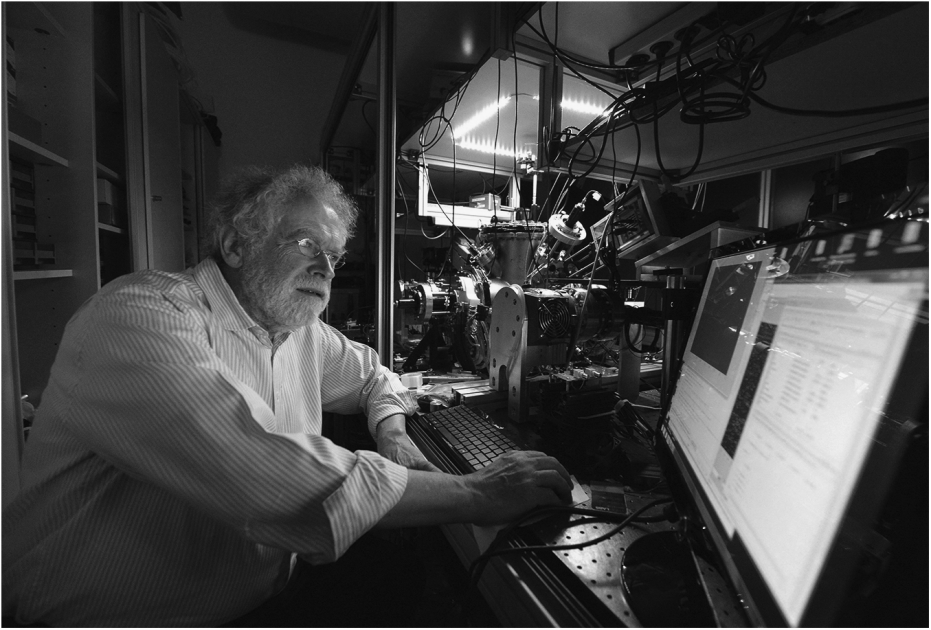
Figure 5: Anton Zeilinger in his laboratory
In 2017, Zeilinger and collaborators used starlight emitted 8 billion years ago from distant quasars as a random source to set measurement angles, pushing the freedom-of-choice origin back to the early universe [9].
Marissa Giustina, a former student of Zeilinger who joined Google's Quantum AI team, noted: "The feasibility of quantum error correction relies directly on the experimental fact that Bell's inequality is violated."
Bringing Nobel-Caliber Experiments to the Classroom
When Clauser assembled his basement apparatus, his budget could not cover a standard oscilloscope. Aspect submerged acousto-optic switches in distilled water to close the locality loophole. Zeilinger relocated detectors to subterranean vaults to extend photon flight paths by 60 meters.
Today, custom-assembled scrap components and water baths are no longer necessary.
The Jiuzhang Quantum Entanglement Educational System consolidates a half-century of experimental progress into a desktop, plug-and-play platform:
-
Modular Architecture: Supports customizable optical setups and interchangeable optical modules, enabling deep exploration of experimental principles.
-
Applied Explorations: Extends baseline verification to advanced experiments, including Bell state preparation, fidelity calculation, and single-photon characterization.
-
Turnkey Educational Solution: Integrates seamlessly with Jiuzhang's "Century of Nobel Laureates" series, combining physical hardware, numerical simulation, and instructional methodology to cultivate research mindsets and practical laboratory skills.
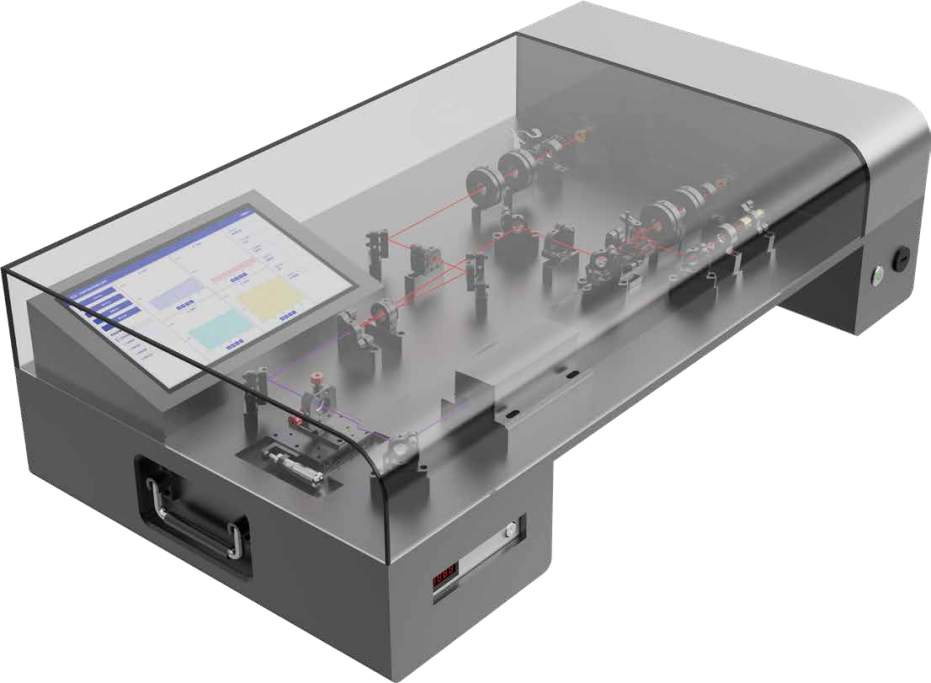
Figure 6: Quantum Entanglement Educational System
Bring the core physics behind the 2022 Nobel Prize into your laboratory today.
References
[1]A. Einstein et al., “Can quantum-mechanical description of physical reality be considered complete?” Phys. Rev. 47, 777 (1935).
[2]J. S. Bell, “On the Einstein Podolsky Rosen paradox,” Physics 1, 195 (1964).
[3]J. F. Clauser et al., “Proposed experiment to test local hidden-variable theories,” Phys. Rev. Lett. 23, 880 (1969).
[4]S. J. Freedman and J. F. Clauser, “Experimental test of local hidden-variable theories,” Phys. Rev. Lett. 28, 938 (1972).
[5]A. Aspect et al., “Experimental test of Bell’s inequalities using time-varying analyzers,” Phys. Rev. Lett. 49, 1804 (1982).
[6]D. Bouwmeester , et al. "Experimental quantum teleportation." Nature 390.6660: 575-579 (1997).
[7]D. M. Greenberger, M. A. Horne, and A. Zeilinger. "Going beyond Bell’s theorem." Bell’s theorem, quantum theory and conceptions of the universe. Dordrecht: Springer Netherlands, 69-72 (1989)..
[8]M. Giustina, et al. "Significant-loophole-free test of Bell’s theorem with entangled photons." Physical review letters 115.25: 250401 (2015).
[9]J. Handsteiner, et al. "Cosmic Bell test: measurement settings from milky way stars." Physical review letters 118.6: 060401 (2017).
Share


Telephone: +86 4008165520
E-mail:service@jiuzhangqt.com
Address: 11th Floor, Building C, Big Data Industry Base, High-Tech Zone, Jinan, Shandong Province
Copyright © Jiuzhang (Jinan) Quantum Technology Co., Ltd. All Rights Reserved. 鲁ICP备2023015890号
Scan the QR Code
Follow Our Official WeChat Account