Centennial Nobel
"Jiuzhang 4.0" Quantum Computing Achieves 3,050 Photons with Our Participation
The highly anticipated "Jiuzhang 4.0" is officially here!
A research team led by Jian-Wei Pan and Chao-Yang Lu at the University of Science and Technology of China (USTC), in collaboration with domestic research units, has successfully constructed the "Jiuzhang 4.0" programmable photonic quantum computing prototype operating with 3,050 photons, setting a new world record for photonic quantum computing.
Compared with the best available classical algorithms, Jiuzhang 4.0 completes a single Gaussian Boson Sampling (GBS) task in just 25.6 microseconds. This is 10^54 times faster than the world's current fastest supercomputer, far exceeding the simulation capabilities of known classical algorithms. The findings have been published in the top international academic journal Nature.
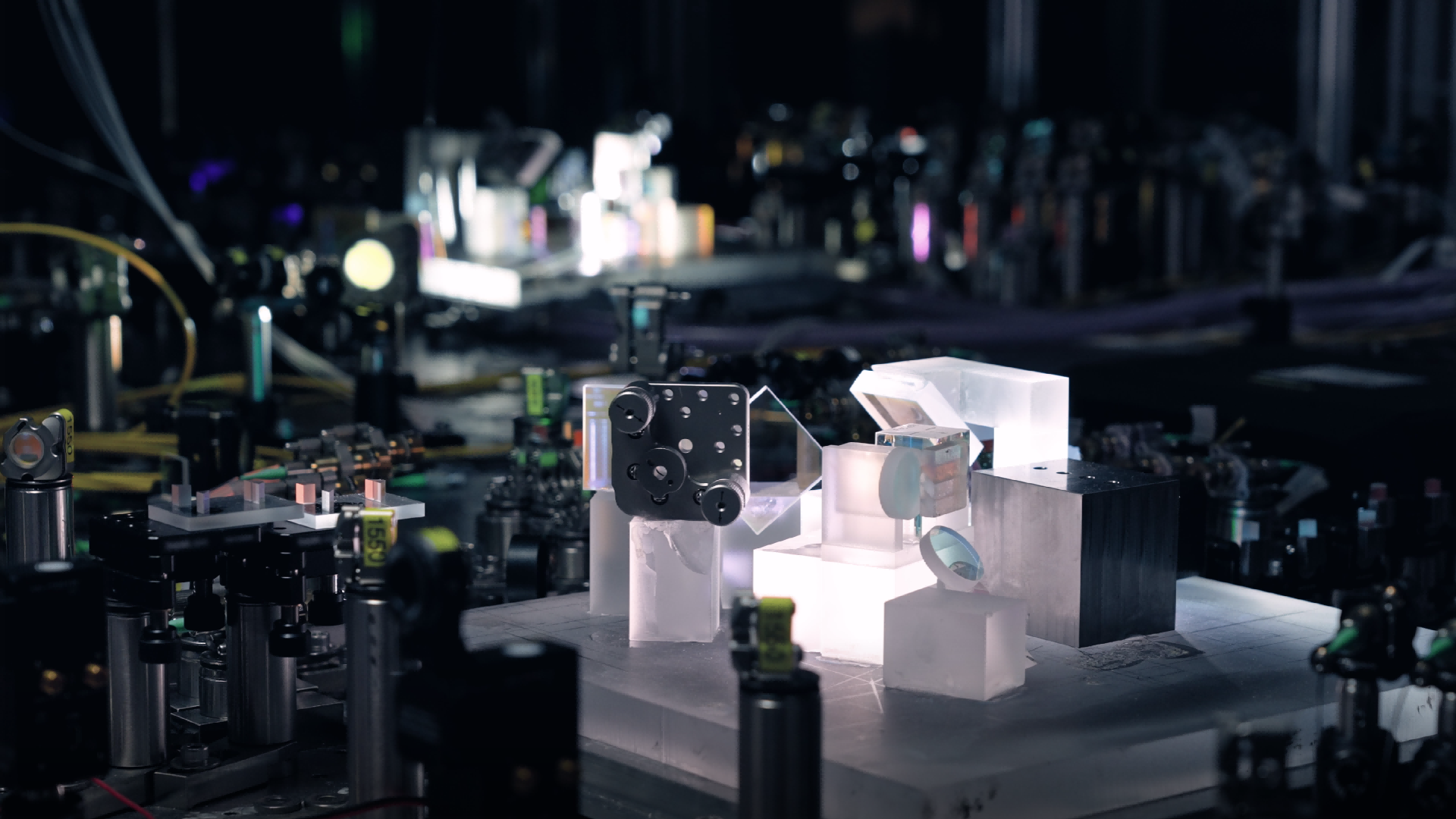
(Figure 1: Close-up of Jiuzhang 4.0)
As the sole quantum computing corporate participant, Jiuzhang Quantum Technology Co., Ltd. ("Jiuzhang Quantum") participated in the joint development of the "Jiuzhang 4.0" photonic quantum computing prototype, helping consolidate China's global leadership position in photonic quantum computing.
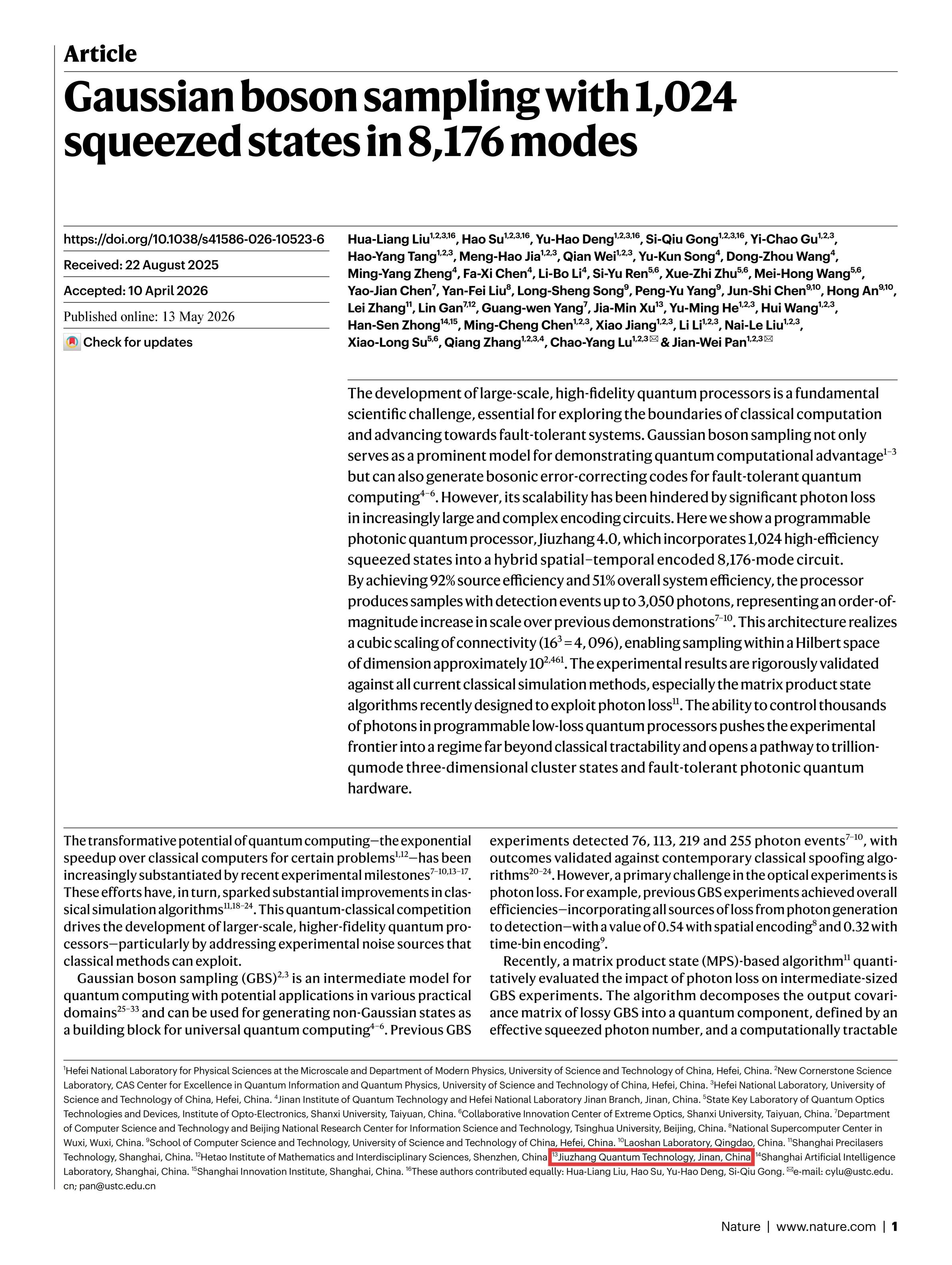
(Figure 2: Jiuzhang Quantum listed as one of the participating units)
Unprecedented Quantum Computational Advantage
Jiuzhang 1.0 addressed the question: Can "quantum computational advantage" be achieved?
Jiuzhang 4.0 addresses the question: Can "quantum computational advantage" be scaled?
This experiment demonstrated Gaussian Boson Sampling with 3,050 detected photons across 1,024 input squeezed states and 8,176 output modes, achieving a Hilbert space dimension of 10^2461—officially entering an unprecedented regime unreachable by classical simulation.
Experimental results show that Jiuzhang 4.0 requires only 25.6 microseconds to perform a single GBS run. In contrast, using the most advanced classical algorithms, El Capitan—the world's fastest supercomputer—would take approximately 10^42 years to complete the equivalent task, yielding a quantum speedup advantage factor of 10^54.
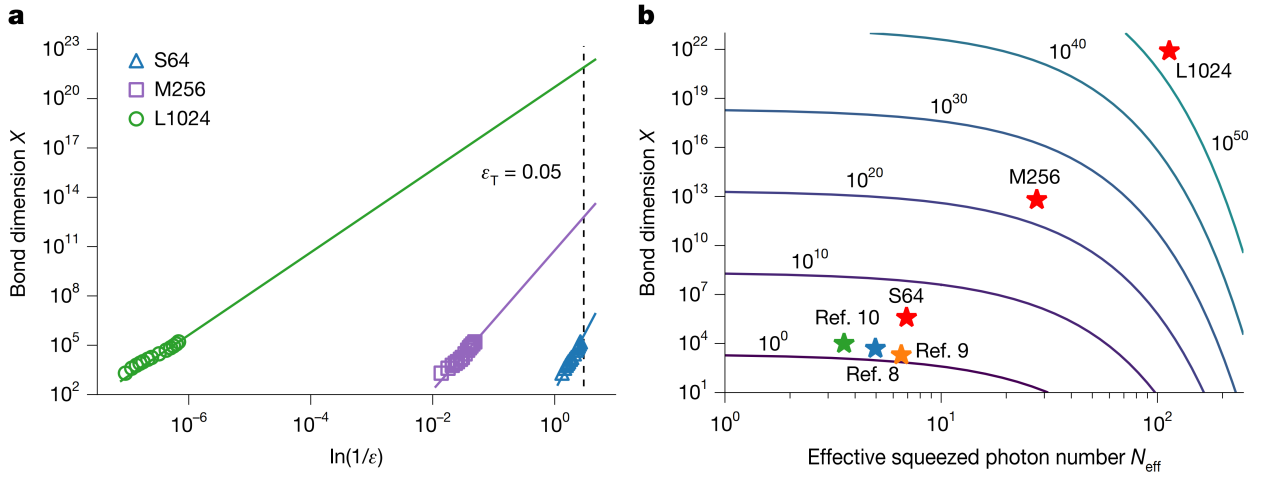
(Figure 3: Estimated quantum speedup of Jiuzhang 4.0 relative to classical simulations)
In terms of system architecture, Jiuzhang 4.0 adopts a programmable spatial-temporal hybrid encoding scheme, comprising high-performance squeezed light sources, a programmable multi-mode interference network, and a high-efficiency Superconducting Nanowire Single-Photon Detection (SNSPD) system. This framework enables large-scale quantum coupling across thousands of spatial-temporal modes with excellent scalability.
Simultaneously, the system achieves an overall efficiency of 51%, effectively suppressing photon loss and noise. This performance excludes all known classical spoofing models, further verifying the robust quantum computational advantage of photonic systems in Gaussian Boson Sampling tasks.
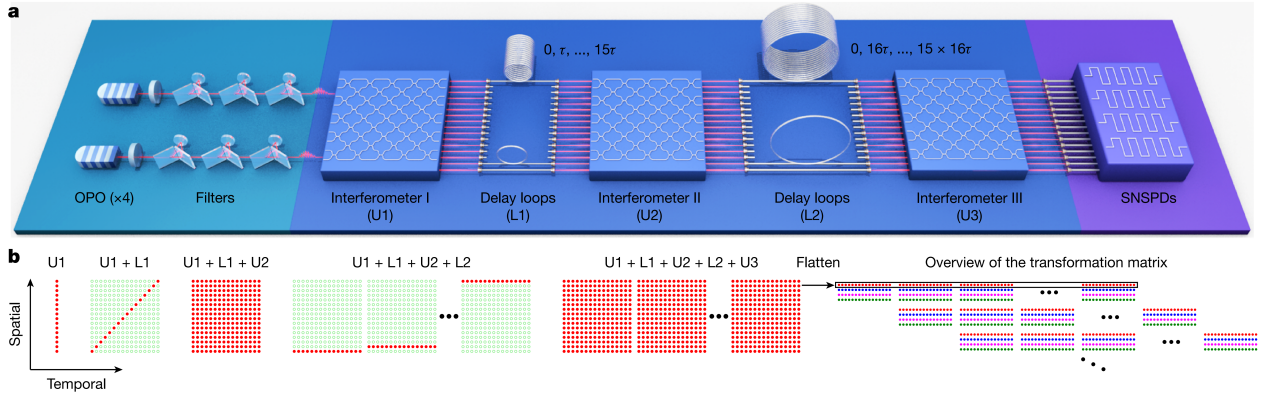
(Figure 4: The three core subsystems of Jiuzhang 4.0: Squeezed Light Source, Programmable Spatial-Temporal Hybrid Encoding Circuit, and Single-Photon Detection & Coincidence Counting System)
From Hardware Leadership to Practical Application Potential
Leveraging the hardware capabilities of the "Jiuzhang" series, the research team has achieved continuous breakthroughs in quantum computing application exploration in recent years:
-
Combinatorial Optimization & Graph Theory: Using Gaussian Boson Sampling (GBS) to solve dense subgraph identification and Max-Haf problems, achieving up to a 180-million-fold speedup over classical algorithms [Phys. Rev. Lett. 130, 190601 (2023)].
-
Quantum Chemistry: Reached chemical accuracy in calculating ground-state energy curves for molecules such as LiH and BeH2 [PRX Quantum 6, 040357 (2025)].
-
Quantum Algorithms: Proposed the Schrödinger-Heisenberg Variational Quantum Algorithm (SHVQA), enabling high-precision electronic structure calculations with shallower circuit depths [Phys. Rev. Lett. 131, 060406 (2023)].
-
Quantum Metrology & Machine Learning: Achieved measurement precision surpassing NOON states in quantum metrology [Phys. Rev. Lett. 130, 070801 (2023)]. For image recognition, 8176-mode GBS-based quantum models outperformed classical linear methods on datasets including MNIST and Fashion-MNIST [arXiv:2506.19707 (2025)].
In industrial applications, the team has deployed hybrid quantum-classical algorithms to complex optimization scenarios such as airport gate allocation and port container scheduling, boosting computational efficiency by hundreds to thousands of times and showcasing the vast potential of photonic quantum computing in intelligent optimization.
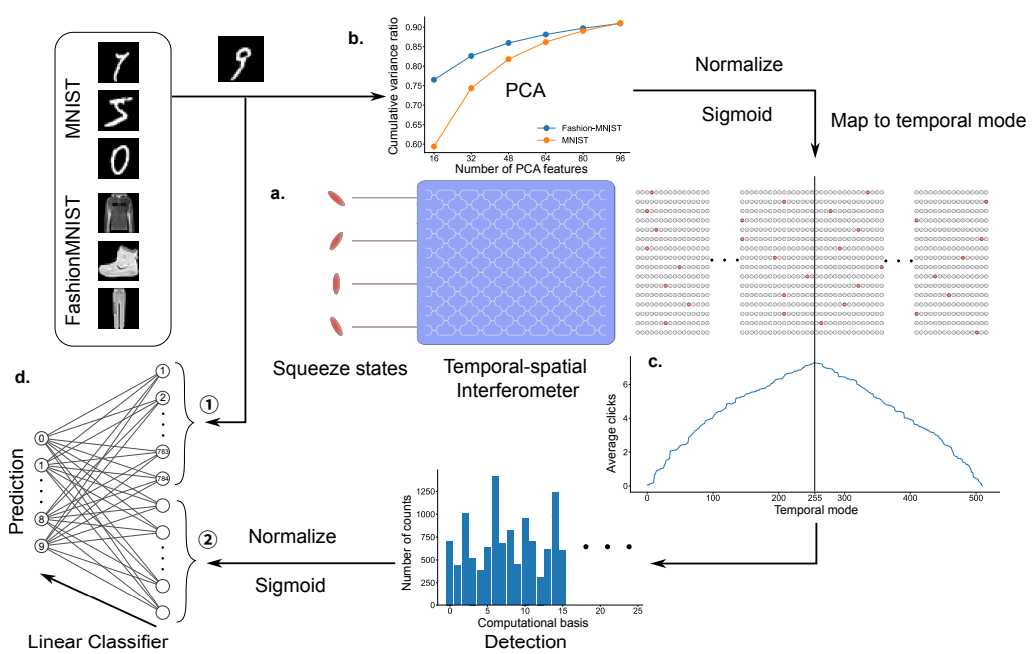
(Figure 5: Application of Gaussian Boson Sampling in image recognition)
Conclusion
From Jiuzhang 1.0 to Jiuzhang 4.0, China's photonic quantum computing has continuously broken world records. This progression not only underscores China's frontier leadership in foundational quantum computing research, but also marks a pivotal transition for photonic quantum computing—moving from verifying quantum advantage to exploring practical real-world applications.
As a major participating organization in the development of Jiuzhang 4.0, Jiuzhang Quantum will remain committed to advancing core photonic quantum technologies. We will continue driving the practical implementation and commercial deployment of photonic quantum computing across education, scientific research, transportation logistics, artificial intelligence, and quantum chemistry.
Looking forward, Jiuzhang Quantum will continue to build a thriving ecosystem integrating Research Platforms + Industry Applications + Talent Cultivation, helping move quantum technology from the laboratory into the real world.
Paper Link: https://www.nature.com/articles/s41586-026-10523-6
Share


Telephone: +86 4008165520
E-mail:service@jiuzhangqt.com
Address: 11th Floor, Building C, Big Data Industry Base, High-Tech Zone, Jinan, Shandong Province
Copyright © Jiuzhang (Jinan) Quantum Technology Co., Ltd. All Rights Reserved. 鲁ICP备2023015890号
Scan the QR Code
Follow Our Official WeChat Account